Painted Bunting
Our most colorful songbird — and a favorite target of illegal trappers in winter.

Oct 1 – Apr 15
In season now Don’t share exact locations until April 15.
- Jan — sensitive
- Feb — sensitive
- Mar — sensitive
- Apr — partly sensitive
- May
- Jun
- Jul
- Aug
- Sep
- Oct — sensitive (this month)
- Nov — sensitive
- Dec — sensitive
Why it’s sensitive
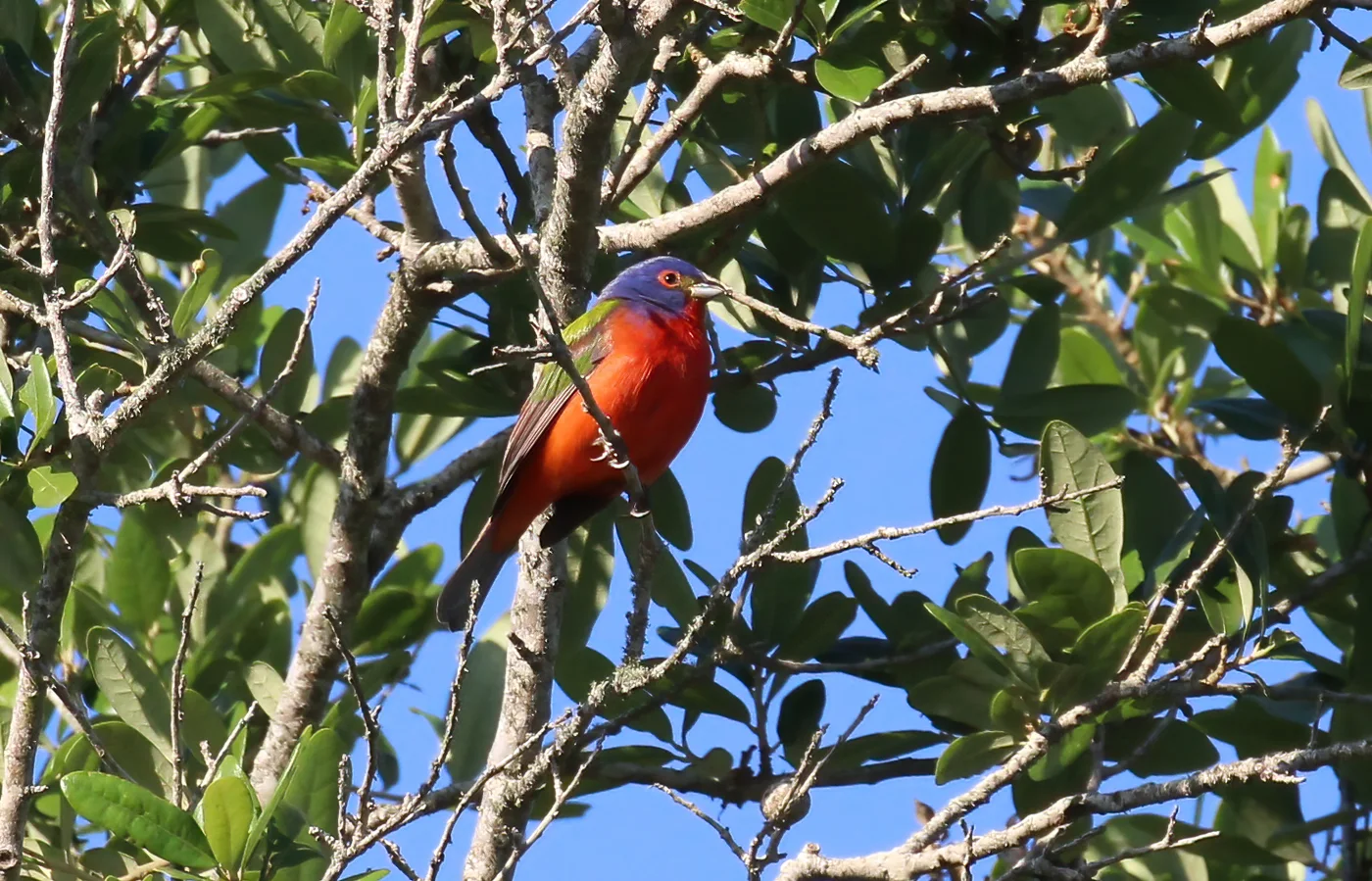
Male Painted Buntings — blue head, red underparts, lime-green back — are among the most striking birds in North America, and that beauty is the problem. In winter they are trapped for the illegal cage-bird trade, often at backyard feeders whose locations have been shared online. The eastern population, which breeds along the coast from North Carolina to Northeast Florida, has declined, and the Florida Fish and Wildlife Conservation Commission tracks it closely.
When
eBird treats the Painted Bunting as sensitive in Florida from October 1 to April 15 — the wintering season, when trapping happens. From April 16 to September 30, the breeding season, eBird shows Painted Bunting sightings normally.
Painted Buntings nest in coastal thickets and maritime hammocks right here in Nassau and Duval counties in spring and summer, and some visit feeders in winter.
How eBird handles it
- Sightings dated October 1 – April 15 in Florida are hidden from other people’s view of your checklist and from hotspot pages, and appear on maps only as a large grid square.
- Sightings dated April 16 – September 30 are public like any other bird.
- Protection follows the sighting’s date, so a winter sighting stays hidden permanently.
How iNaturalist handles it
iNaturalist is stricter: the Painted Bunting is listed in Florida as S2 (Imperiled) by NatureServe, so every Florida observation is obscured automatically, all year. People can still see the photo, the identification and the date — the map shows only a random point within about 18 miles.
How to protect our local buntings
Withhold precise locations. If anyone asks for the exact location of a bunting, politely withhold the details. It is completely safe to share general excitement — “The buntings are back in Nassau County!” — but never post street addresses, neighborhood names or GPS coordinates online. That includes trip reports, club emails, the forum and social media.
Keep your backyard private. Poachers actively monitor local social media groups to find trapping sites. To keep your yard safe, the best practice is to avoid posting photos of buntings in your backyard or at your feeders on public websites entirely — this one included. Instead, keep those special moments private, or share them in person at our next club event!
Never share a feeder’s location, in any season. Wintering buntings return to the same feeders year after year.
Do report your sightings to eBird and iNaturalist as usual — eBird hides winter sightings and iNaturalist hides Florida sightings all year, so your records help science without giving the birds away.
On field trips from April 16 to September 30, when eBird shows bunting sightings normally, naming the park or preserve in a trip report is fine. A yard, feeder or neighborhood never is.
Learn more
At a glance
- SensitiveOct 1 – Apr 15
- Report it?Yes — eBird and iNaturalist protect it automatically
- Share the spot?Not during its sensitive season — name the park or county only